
The Path to Recovery: Osteopathy in Concussion Management
A concussion is more than just a “bump on the head.” It is a functional brain injury caused by a bump, blow, or jolt to the head or body that causes the brain to move rapidly back and forth. While rest was once the primary recommendation, modern clinical guidelines emphasize a multidisciplinary, active approach to recovery. Manual therapy, specifically osteopathy, is increasingly recognized for its role in addressing the physical and physiological dysfunctions that linger after the initial impact.
Understanding the Symptoms
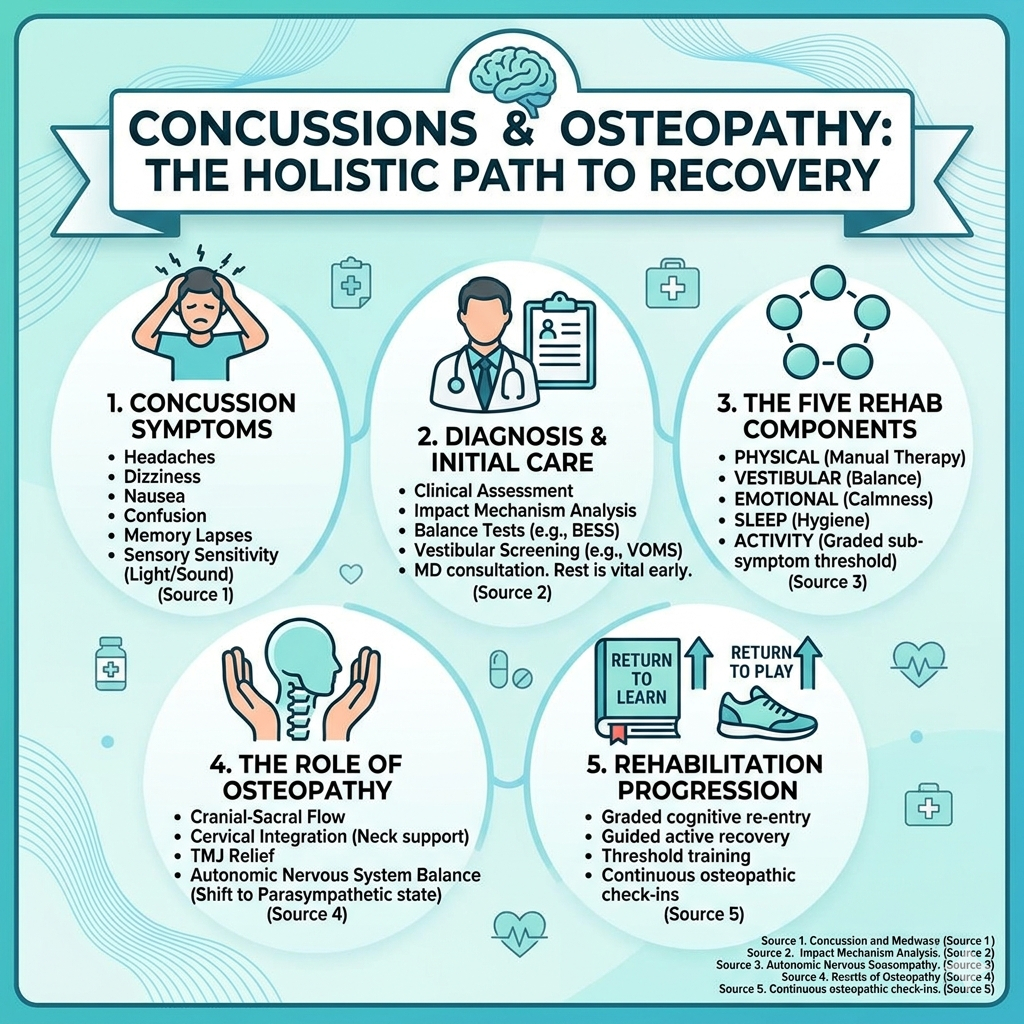
Concussion symptoms often fall into four primary categories. Recognizing these is the first step toward effective management:
- Physical: Headaches, nausea, dizziness, sensitivity to light/noise, and balance issues.
- Cognitive: Feeling “in a fog,” difficulty concentrating, slowed processing, and memory lapses.
- Emotional: Increased irritability, sadness, nervousness, or heightened anxiety.
- Sleep: Sleeping more than usual, sleeping less than usual, or trouble falling asleep.
The Diagnostic Landscape
Diagnosis is clinical, meaning it is based on the mechanism of injury and the presentation of symptoms. Because a concussion is a functional rather than structural injury, standard CT scans and MRIs often appear normal. Practitioners utilize tools like the SCAT6 (Sport Concussion Assessment Tool) and VOMS (Vestibular/Ocular-Motor Screening) to assess neurological function, balance, and visual tracking.
The Role of Osteopathy in Treatment
Osteopathy focuses on the relationship between the body’s structure and its function. In the context of a concussion, an osteopathic manual practitioner looks beyond the brain to the physical structures that support neurological health.
1. Cranial-Sacral Therapy
By using gentle manual techniques, practitioners aim to optimize the movement of cerebrospinal fluid and address tensions in the dural membranes. This can help alleviate the “pressure” sensation often reported by patients.
2. Cervical Spine Integration
It is nearly impossible to sustain a concussion without some degree of strain to the cervical spine (whiplash). Osteopathic mobilizations to the neck can reduce cervicogenic headaches and improve blood flow to the head.
3. Autonomic Nervous System Balance
Concussions often leave the body in a state of sympathetic (“fight or flight”) dominance. Osteopathic treatment helps shift the body back toward a parasympathetic state, promoting the “rest and digest” functions necessary for tissue repair.
The Five Layers of Concussion Rehabilitation
- Physical: Addressing neck stiffness, jaw tension (TMJ), and headaches.
- Visual/Vestibular: Managing dizziness and “tracking” issues through targeted exercises.
- Emotional: Providing a calm environment to reduce sensory overload and anxiety.
- Sleep Hygiene: Regulating the sleep-wake cycle through physical relaxation.
- Physical Activity: Guided “Return to Play” protocols that use sub-symptom threshold exercise.
Rehabilitation & Recovery
Recovery is rarely linear. Osteopathic care serves as a foundational support during the “Return to Learn” and “Return to Play” phases. By reducing the physical barriers to recovery—such as restricted joint mobility or soft tissue tension—the patient can better tolerate the cognitive and physical demands of daily life.
Sources & References
McCrory P, et al. Consensus statement on concussion in sport (Amsterdam 2022). Br J Sports Med.
Guillaud A, et al. Osteopathic manipulative treatment of the cranial field, a systematic review. PLoS One. 2016.
Lederman E. The science and practice of manual therapy. Elsevier Health Sciences. 2005.
Ontario Neurotrauma Foundation. Standards for Post-Concussion Care.
A concussion is more than just a “bump on the head.” It is a functional brain injury caused by a bump, blow, or jolt to the head or body that causes the brain to move rapidly back and forth. While rest was once the primary recommendation, modern clinical guidelines emphasize a multidisciplinary, active approach to recovery. Manual therapy, specifically osteopathy, is increasingly recognized for its role in addressing the physical and physiological dysfunctions that linger after the initial impact.
Understanding the Symptoms
Concussion symptoms often fall into four primary categories. Recognizing these is the first step toward effective management:
- Physical: Headaches, nausea, dizziness, sensitivity to light/noise, and balance issues.
- Cognitive: Feeling “in a fog,” difficulty concentrating, slowed processing, and memory lapses.
- Emotional: Increased irritability, sadness, nervousness, or heightened anxiety.
- Sleep: Sleeping more than usual, sleeping less than usual, or trouble falling asleep.
The Diagnostic Landscape
Diagnosis is clinical, meaning it is based on the mechanism of injury and the presentation of symptoms. Because a concussion is a functional rather than structural injury, standard CT scans and MRIs often appear normal. Practitioners utilize tools like the SCAT6 (Sport Concussion Assessment Tool) and VOMS (Vestibular/Ocular-Motor Screening) to assess neurological function, balance, and visual tracking.
The Role of Osteopathy in Treatment
Osteopathy focuses on the relationship between the body’s structure and its function. In the context of a concussion, an osteopathic manual practitioner looks beyond the brain to the physical structures that support neurological health.
1. Cranial-Sacral Therapy
By using gentle manual techniques, practitioners aim to optimize the movement of cerebrospinal fluid and address tensions in the dural membranes. This can help alleviate the “pressure” sensation often reported by patients.
2. Cervical Spine Integration
It is nearly impossible to sustain a concussion without some degree of strain to the cervical spine (whiplash). Osteopathic mobilizations to the neck can reduce cervicogenic headaches and improve blood flow to the head.
3. Autonomic Nervous System Balance
Concussions often leave the body in a state of sympathetic (“fight or flight”) dominance. Osteopathic treatment helps shift the body back toward a parasympathetic state, promoting the “rest and digest” functions necessary for tissue repair.
The Five Layers of Concussion Rehabilitation
- Physical: Addressing neck stiffness, jaw tension (TMJ), and headaches.
- Visual/Vestibular: Managing dizziness and “tracking” issues through targeted exercises.
- Emotional: Providing a calm environment to reduce sensory overload and anxiety.
- Sleep Hygiene: Regulating the sleep-wake cycle through physical relaxation.
- Physical Activity: Guided “Return to Play” protocols that use sub-symptom threshold exercise.
Rehabilitation & Recovery
Recovery is rarely linear. Osteopathic care serves as a foundational support during the “Return to Learn” and “Return to Play” phases. By reducing the physical barriers to recovery—such as restricted joint mobility or soft tissue tension—the patient can better tolerate the cognitive and physical demands of daily life.
Sources & References
McCrory P, et al. Consensus statement on concussion in sport (Amsterdam 2022). Br J Sports Med.
Guillaud A, et al. Osteopathic manipulative treatment of the cranial field, a systematic review. PLoS One. 2016.
Lederman E. The science and practice of manual therapy. Elsevier Health Sciences. 2005.
Ontario Neurotrauma Foundation. Standards for Post-Concussion Care.
0 Comments